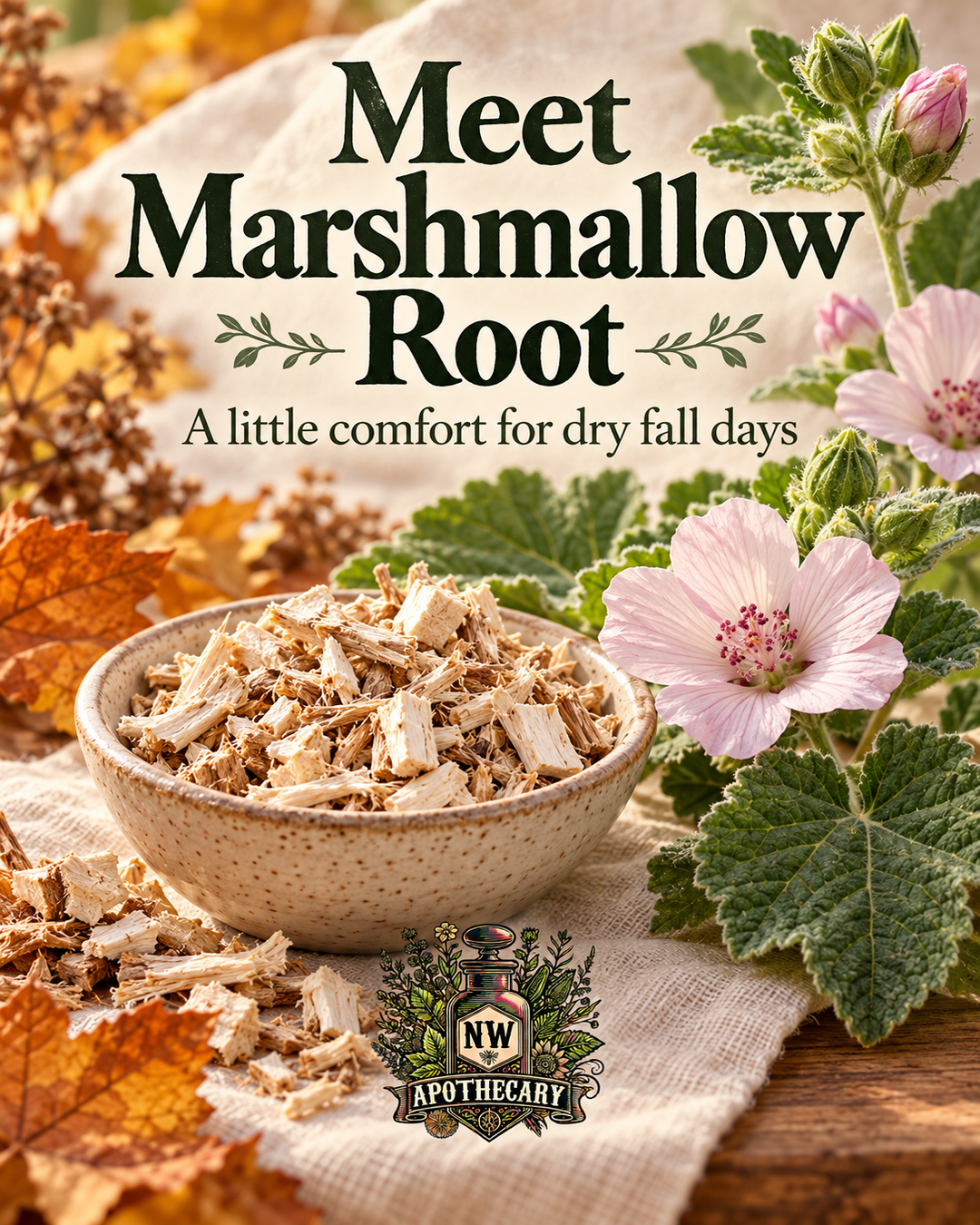

When the air turns crisp and the heat comes on indoors, you may notice it in your throat first. That dry, scratchy feeling is a perfect introduction to one of herbalism’s most soothing plants: marshmallow root.
And yes, this is the plant connected to the original marshmallow confection, but we’re talking about the root, not the fluffy bag from the grocery store.
What Makes Marshmallow Root Different?
Marshmallow (Althaea officinalis) contains mucilage, a substance that becomes slippery when mixed with water. Herbalists call plants like this demulcents: they’re traditionally used to soothe irritated tissues.
That moistening quality is why I think of marshmallow root when someone describes dryness—a scratchy throat or mild digestive irritation, for example. It isn’t the herb I’d choose just because the calendar says “cold season.” The details of how someone feels matter.


Why a Cold Infusion?
One of my favorite ways to get to know marshmallow root is a cold-water infusion. Instead of making a quick cup of hot tea, you let the root sit in cool water for several hours, then strain it. The result can feel noticeably silky. It’s a simple way to experience the quality that makes this herb so distinctive.
Marshmallow root also appears in teas and other preparations. The preparation matters: a water infusion and an alcohol tincture aren’t necessarily interchangeable when the goal is that slippery, mucilage-rich experience.
Tradition and Research: Both Have a Place
Marshmallow root has a long history of use for mouth and throat irritation with a dry cough, as well as mild stomach discomfort. The European Medicines Agency’s review recognizes these as traditional uses. It also notes that the clinical studies available so far aren’t strong enough to draw firm conclusions about effectiveness.
That doesn’t erase the plant’s history. It helps us talk honestly about what traditional experience suggests and what clinical research has yet to establish.
Curious to Learn More?
Explore marshmallow root in the NW Apothecary materia medica to learn more about the plant, its traditional uses, and common preparations.
You can also visit our searchable herbal exploration page to discover other herbs.
Julie Nelson is the herbalist and owner of NW Apothecary.

Educational disclaimer: This article is for education and is not medical advice. Herbs and supplements can have side effects and interact with medications. Talk with your healthcare professional before adding them if you take medication, are pregnant or nursing, or are managing a medical condition.
Marshmallow root safety: Its mucilage may affect how other oral medicines are absorbed, so ask your pharmacist or healthcare professional about separating it from your medications. A persistent or worsening cough, fever, or breathing difficulty needs medical attention; don’t rely on an herb to evaluate those symptoms.
NW Apothecary disclaimer: I am an herbalist, not a licensed medical professional. The information shared on this blog is for educational purposes only and is not intended to diagnose, treat, or replace professional medical advice. If you are experiencing a medical emergency, call 911. Read our full website disclaimer.
Disclaimer: I am a herbalist, not a licensed medical professional. The information shared on this blog is for educational purposes only and is not intended to diagnose, treat, or replace professional medical advice. If you are experiencing a medical emergency, please call 911 or contact your healthcare provider immediately. Always speak with your physician or qualified healthcare professional before starting any herbal protocol—especially if you’re pregnant, nursing, have a medical condition, or take prescription medications. Every individual responds differently to herbs, and they may interact with medications or existing conditions. No client–practitioner relationship is established by reading this content. Use of the information provided here is at your own discretion and risk.