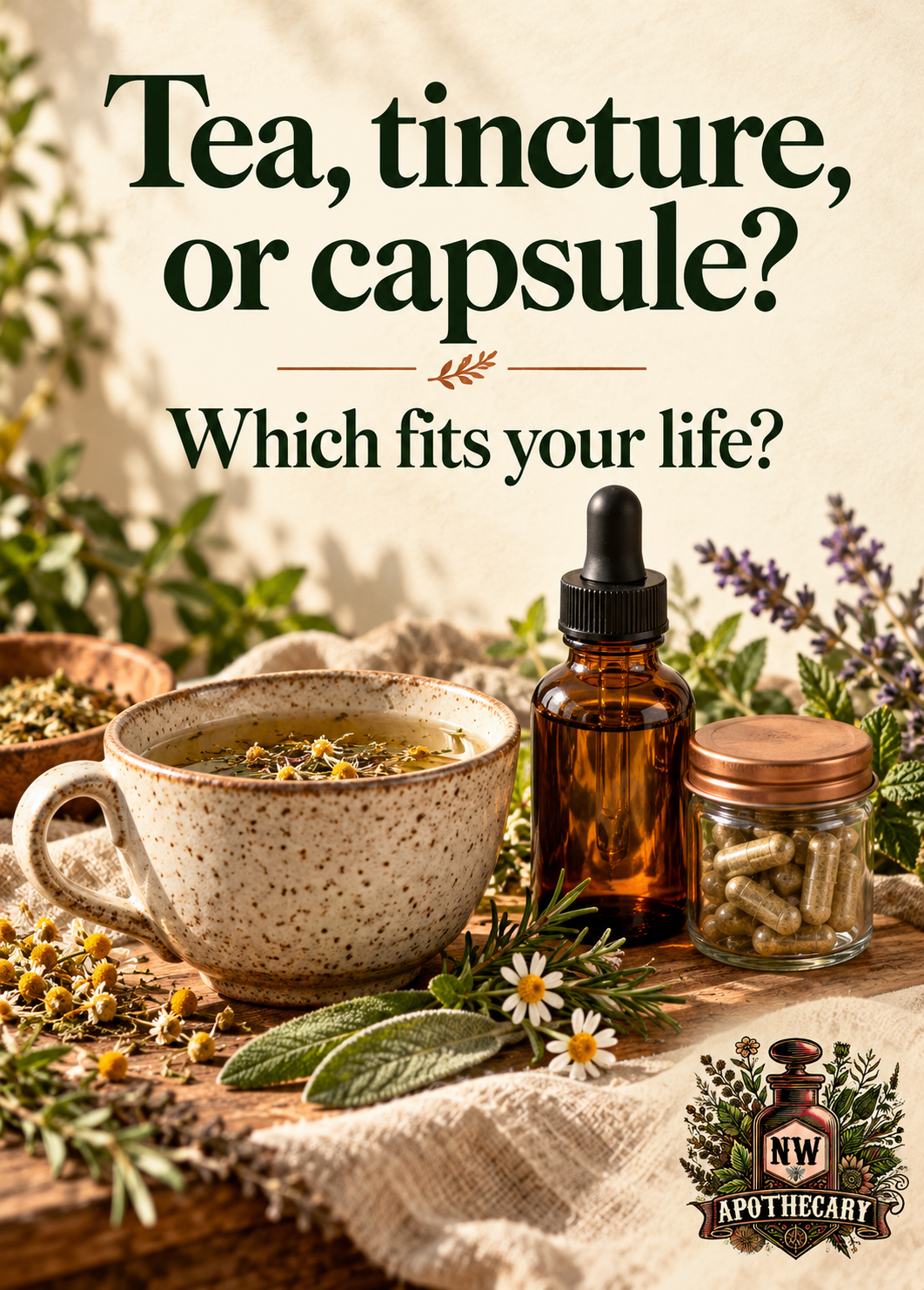

You’ve found an herb you’re curious about. Then comes another question: Should you drink it as tea, take a tincture, or buy capsules?
There isn’t one “best” form for every herb, or every person. How an herb is prepared affects what ends up in the finished product, and the easiest option to use consistently may be different for each of us.

Tea: A Moment to Slow Down
Herbal tea is made by steeping plant material in water. Some herbs are prepared with a short steep; tougher plant parts, such as certain roots, may call for a longer simmer. Either way, the method matters.
I love tea when someone enjoys the process. Making a cup can become a welcome pause in the day, and a blend can be adjusted to suit someone’s taste. But tea does take time. If a person knows they won’t make it regularly, I’d rather hear that than recommend a beautiful blend that stays untouched in the cupboard.
Tinctures: A Convenient Liquid Option
A tincture is an herbal extract typically made with alcohol and water. The liquid draws constituents from the plant and allows the finished preparation to be taken in a measured amount, often added to a little water.
Tinctures can be convenient when you’re away from home or don’t want to brew tea. At NW Apothecary, I pay attention to the herb, the plant part, and how a tincture is made, not just the name on the bottle.
Alcohol content is also worth discussing. A tincture won’t suit everyone, and I want to know if you prefer to avoid alcohol before recommending one.


Capsules: Simple, but Read the Label
Capsules appeal to people who want something familiar, portable, and easy to take without tasting the herb. What’s inside can vary, though. One capsule might contain powdered whole herb; another might contain a concentrated extract. Those are not automatically equivalent, even when the front of the bottle lists the same plant.
Look at the ingredient, preparation, and amount per serving. If the label leaves you with questions, ask before assuming one product can be substituted for another.
So, Which One Should You Choose?
I usually start with a few questions:
- Which herb are we considering, and what preparation makes sense for it?
- Do you enjoy a daily cup of tea, or would that feel like another chore?
- Do you want to avoid alcohol or the taste of an herb?
- What medications, supplements, or health considerations need to be reviewed?
The answer may be a tea, a tincture, a capsule, or a different starting point altogether. Herbal support is personal, and the form should be part of that conversation.
My honest herbalist take: The “best” preparation isn’t the trendiest or the most concentrated. It’s one that’s appropriate for the herb, thoughtfully chosen for you, and realistic to use.
Curious about your options? I’d be happy to help you sort through them.
Julie Nelson is the herbalist and owner of NW Apothecary.
Educational disclaimer: This article is for education and is not medical advice. Herbs and supplements can have side effects and interact with medications. Talk with your healthcare professional before adding them if you take medication, are pregnant or nursing, or are managing a medical condition.
Disclaimer: I am a herbalist, not a licensed medical professional. The information shared on this blog is for educational purposes only and is not intended to diagnose, treat, or replace professional medical advice. If you are experiencing a medical emergency, please call 911 or contact your healthcare provider immediately. Always speak with your physician or qualified healthcare professional before starting any herbal protocol—especially if you’re pregnant, nursing, have a medical condition, or take prescription medications. Every individual responds differently to herbs, and they may interact with medications or existing conditions. No client–practitioner relationship is established by reading this content. Use of the information provided here is at your own discretion and risk.