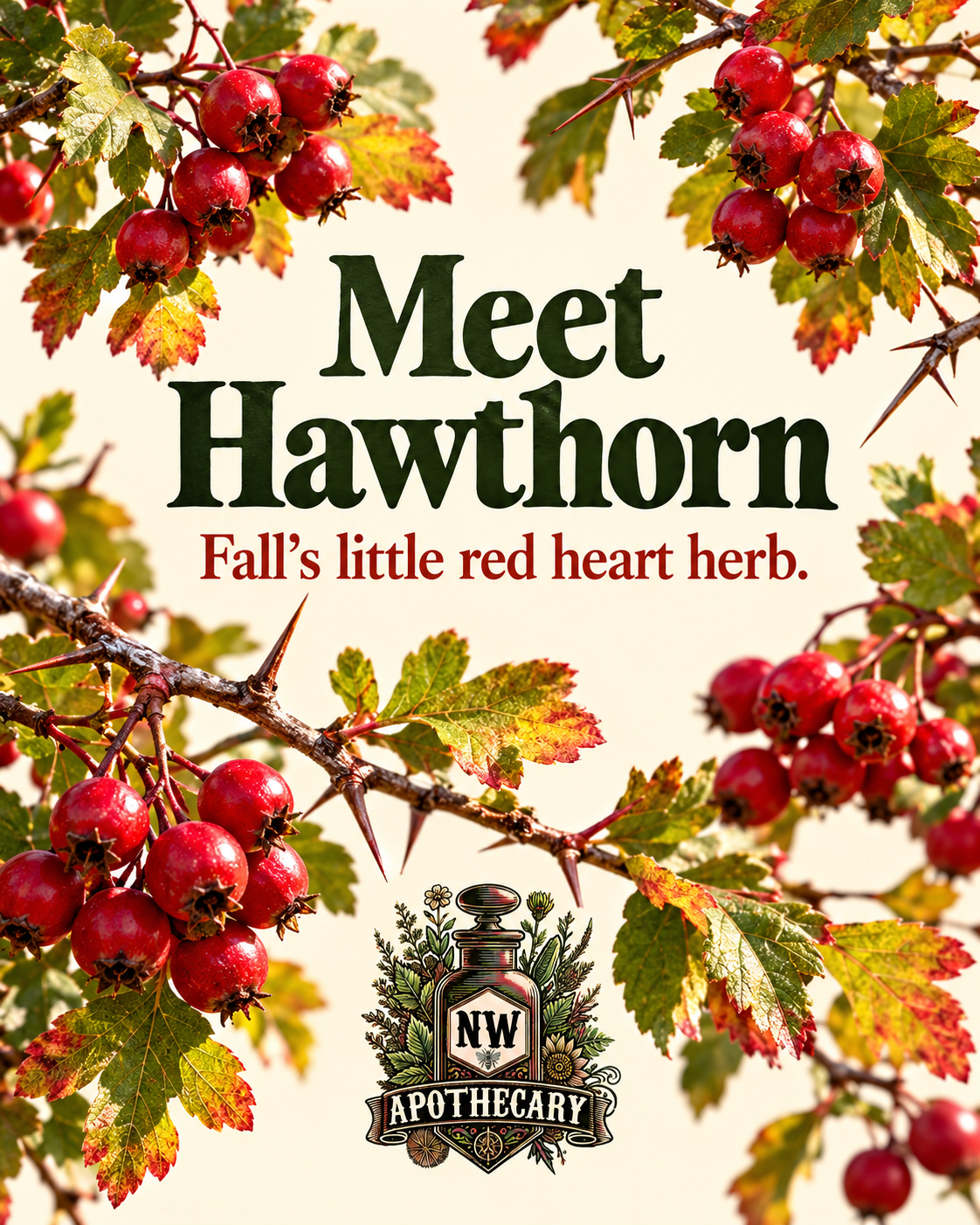

When the leaves begin to turn, hawthorn puts on its own fall display: clusters of small, bright red fruits called haws. They look festive on the branches, but this thorny member of the rose family has a story that goes well beyond its looks.
Herbalists have long associated hawthorn (Crataegus spp.) with the heart. Its berries, leaves, and flowers have all been used in herbal preparations, including teas and tinctures. At NW Apothecary, I think it’s especially fitting that an herb traditionally connected with the heart offers one of fall’s loveliest sights.


A Heart Herb—with a Little Nuance
In traditional herbal practice, hawthorn is used for cardiovascular support. Hawthorn leaf and flower also have a history of use for mild stress and nervousness. That tradition is worth knowing, but it doesn’t mean hawthorn has been proven to treat heart disease. Clinical research on its effects in people with heart failure has had conflicting results.
That distinction matters to me. Herbs have rich histories, and we can appreciate those histories while being clear about what modern studies have—and haven’t—shown.
Getting to Know the Plant
Hawthorn gives us something to notice in more than one season: flowers in spring and colorful haws in fall. Next time you spot those red fruits on a walk, take a closer look at the plant’s branches. The thorns are a good reminder that getting to know an herb begins with learning the whole plant, not just what comes in a bottle.
Curious to go deeper? Visit our Hawthorn Materia Medica page to explore its traditional uses, plant parts, and preparations. You can also use the search box and herb categories on our website to explore our searchable materia medica and learn about other herbs.

Julie Nelson is the herbalist and owner of NW Apothecary.
Educational disclaimer: This article is for education and is not medical advice. Talk with your healthcare professional about health concerns and before adding herbs if you take medications, are pregnant or nursing, or are managing a medical condition.
Hawthorn safety: If you have a heart condition or take heart or blood pressure medication, speak with your healthcare professional before using hawthorn. Do not use an herb in place of prescribed heart care. Seek prompt medical attention for new or worsening chest pain, shortness of breath, or concerning palpitations.
Disclaimer: I am a herbalist, not a licensed medical professional. The information shared on this blog is for educational purposes only and is not intended to diagnose, treat, or replace professional medical advice. If you are experiencing a medical emergency, please call 911 or contact your healthcare provider immediately. Always speak with your physician or qualified healthcare professional before starting any herbal protocol—especially if you’re pregnant, nursing, have a medical condition, or take prescription medications. Every individual responds differently to herbs, and they may interact with medications or existing conditions. No client–practitioner relationship is established by reading this content. Use of the information provided here is at your own discretion and risk.