
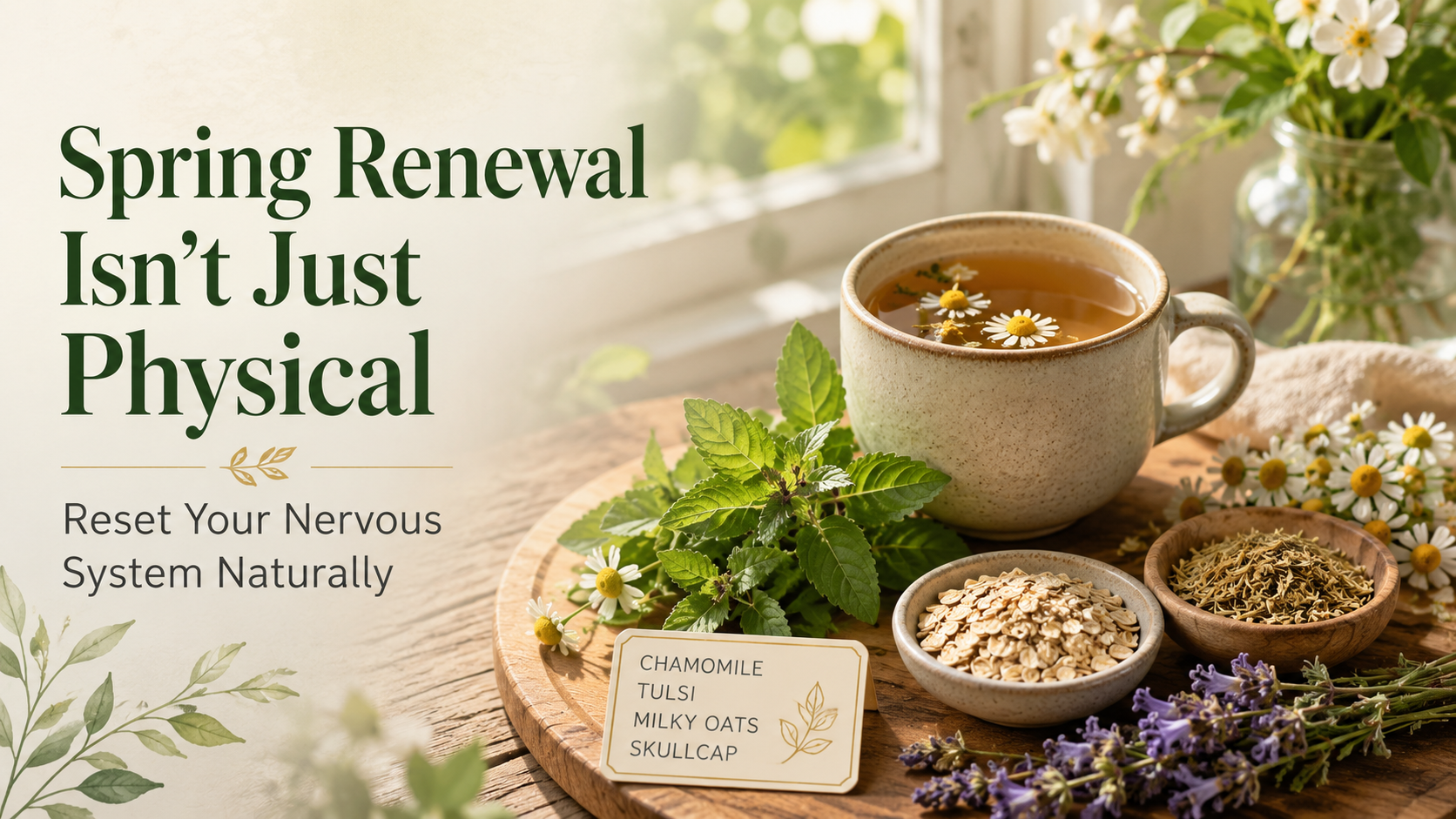
Spring Renewal Isn’t Just Physical: Reset Your Nervous System Naturally
Spring is a season of movement, growth, and fresh energy. But for many people, it also brings anxiety, poor sleep, brain fog, and that “wired but tired” feeling.
You’re sleeping, but still exhausted.
Your brain won’t slow down.
Little things irritate you more than they should.
And even though spring is supposed to feel energizing, you feel overstimulated, anxious, and drained.
Every spring, I see more people struggling with anxiety spikes, poor sleep, restlessness, brain fog, emotional overwhelm, and “wired but tired” exhaustion.
Most people think they need more caffeine, more motivation, or another detox. But often, the nervous system simply needs support.
At NW Apothecary, I see this pattern every spring. Seasonal transition affects more than allergies and sinuses. Longer daylight, schedule changes, increased activity, pollen exposure, and stress can all push the nervous system into overdrive.
Herbs can help slow things down and rebuild resilience without completely sedating you.
Why Spring Can Stress the Nervous System
Winter tends to be slower and more inward. Spring pushes everything into motion again.
More stimulation. More obligations. More light exposure. More social activity.
That transition can dysregulate sleep, stress hormones, mood, and energy levels.
For some people, spring feels uplifting. For others, it feels overstimulating.
This is especially common if you already tend toward:
- Anxiety
- Poor sleep
- Burnout
- Chronic stress
- Emotional tension
- Nervous exhaustion
The goal is not to knock yourself out. The goal is to nourish and regulate the nervous system so your body can adapt more smoothly.
Nervous System Support Herbs I Reach for Most Often
Milky Oats (Avena sativa)
Milky oats are one of my favorite herbs for people who feel depleted, frazzled, overstimulated, or emotionally worn down.
This is not an herb that usually works like a sedative. It works more like nourishment for an exhausted nervous system.
Traditionally, milky oats have been used as a trophorestorative herb, meaning they help rebuild and support nervous system function over time.
Some research on oat extracts suggests potential benefits for cognitive performance, attention, and stress resilience.
- “Wired and tired” feelings
- Burnout
- Nicotine withdrawal
- Stress recovery
- Emotional fragility
- Long-term nervous tension
Skullcap (Scutellaria lateriflora)
Skullcap is one of my go-to herbs for tension that feels stuck in the body.
People often describe needing skullcap when they feel tight, restless, irritable, or unable to shut their brain off.
Traditionally, American skullcap has been used as a calming nervine herb for stress, anxiety, and insomnia.
A small placebo-controlled human trial found improvements in mood disturbance scores with skullcap supplementation.
I often combine skullcap with more nourishing herbs like milky oats because skullcap alone can feel a little drying for some people.
Tulsi, Also Known as Holy Basil
Holy Basil, also called Tulsi, bridges the gap between stress support and energy support.
This herb is often categorized as an adaptogen, meaning it may help the body adapt to stress more effectively.
- Mental overwhelm
- Irritability
- Fatigue
- Emotional tension
- Difficulty focusing
Unlike stimulants, Tulsi tends to feel balancing rather than forcing.
I often use it during the day because it supports calm focus without making people sleepy.
Chamomile
Chamomile gets underestimated because it’s common. But it’s one of the best gentle nervous system herbs we have.
Chamomile is particularly useful when stress affects digestion, sleep, or muscle tension.
- Irritable
- Tight in the stomach
- Restless before bed
- Overstimulated after stressful days
It combines well with nearly every herb listed above.
Tea vs. Tincture: Which Works Better?
Both can work well. The best choice depends on your goals, schedule, and how your body responds.
Tea
Best for:
- Daily rituals
- Gentle support
- Hydration
- Evening wind-down routines
Tinctures
Best for:
- Convenience
- Stronger acute support
- Faster absorption
- Customized formulas
Most people do best with consistency rather than intensity. A small amount daily is often more helpful than only reaching for herbs during a crisis.
Simple Spring Nervous System Practices
Herbs work better when paired with supportive habits. A few simple things can make a noticeable difference.
- Get morning sunlight exposure
- Keep sleep times more consistent
- Reduce screen exposure at night
- Eat protein-rich breakfasts
- Walk outside daily
- Slow caffeine intake if anxiety is high
- Practice breathing exercises or quiet time before bed
You do not need a perfect wellness routine. Small consistent habits matter more.
My General Approach at NW Apothecary
At NW Apothecary, I formulate blends based on the individual rather than using a one-size-fits-all approach.
Some people need:
- Nourishment
- Moistening support
- Better sleep
- Emotional regulation
- Adaptogens
- Tension relief
- Digestive support alongside nervous system support
That’s why custom formulas often work better than generic “stress relief” products.
Final Thoughts
Spring renewal is not only about cleaning your house or starting a detox.
Sometimes renewal means slowing down enough for your nervous system to recover.
If your body feels overstimulated, exhausted, emotionally reactive, or stuck in stress mode, herbs may help support that transition gently and sustainably.
And sometimes the best reset is not pushing harder. It’s rebuilding capacity.
Want Personalized Herbal Support?
I offer custom herbal consultations and personalized tincture blends through NW Apothecary.
Together we look at sleep, stress, energy, constitution, digestion, lifestyle patterns, current medications, and supplements to create a plan tailored specifically to you.
Disclaimer: I am a herbalist, not a licensed medical professional. The information shared on this blog is for educational purposes only and is not intended to diagnose, treat, or replace professional medical advice. If you are experiencing a medical emergency, please call 911 or contact your healthcare provider immediately. Always speak with your physician or qualified healthcare professional before starting any herbal protocol—especially if you’re pregnant, nursing, have a medical condition, or take prescription medications. Every individual responds differently to herbs, and they may interact with medications or existing conditions. No client–practitioner relationship is established by reading this content. Use of the information provided here is at your own discretion and risk.