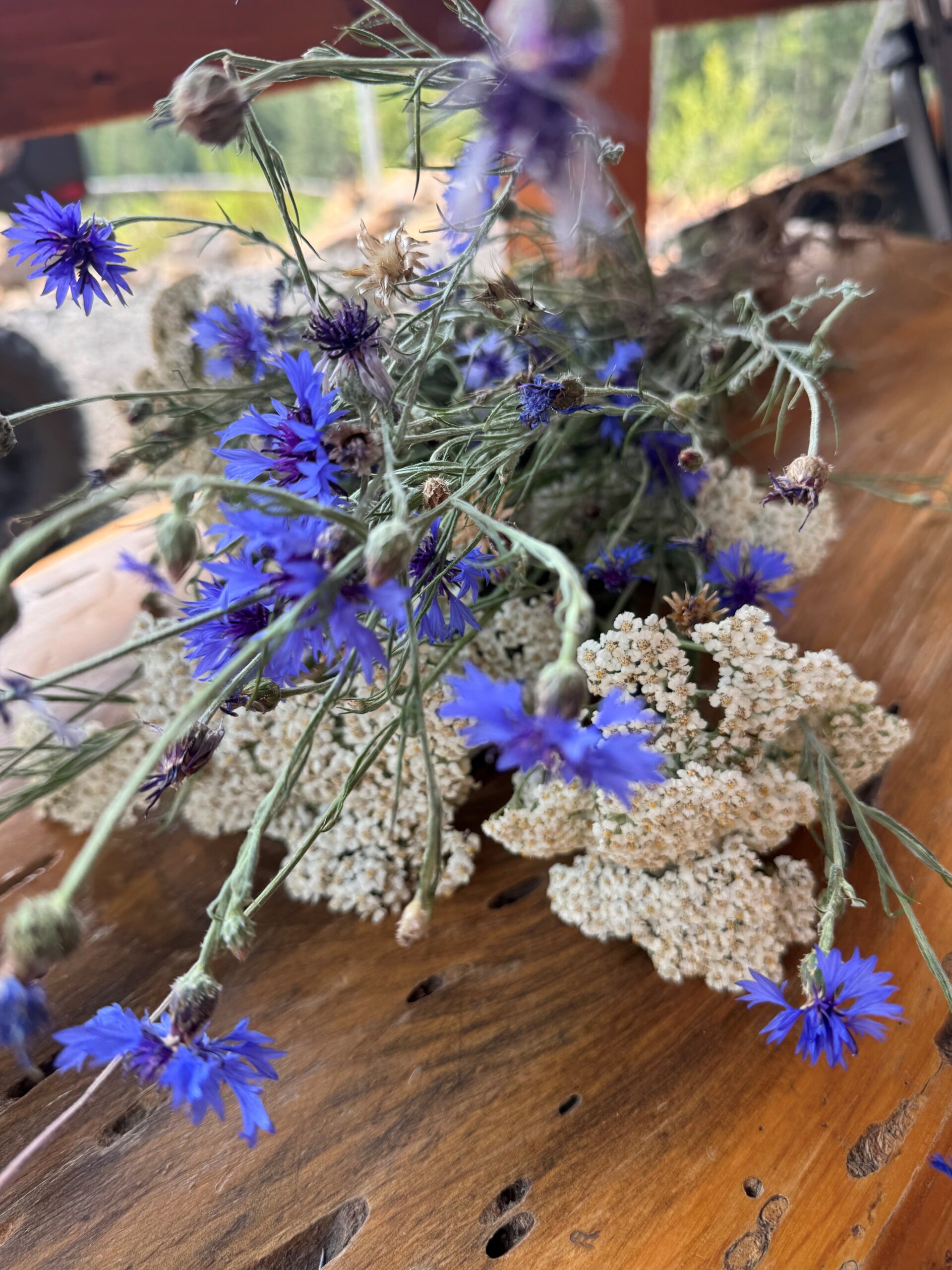
Every year around midsummer, I head out into the dry, rocky hills of North Central Idaho and start scanning for one of my favorite herbal allies—yarrow. This hardy little plant shows up just about everywhere: along gravel roads, in open fields, at the edge of the forest, even poking through your lawn if you’re lucky.
And once you learn to spot it, you’ll never not see it again.

🌿 What Is Yarrow Good For?
Yarrow (Achillea millefolium) has a long history as a wound herb, used to stop bleeding, disinfect cuts, and soothe inflammation. In fact, legend has it that the Greek warrior Achilles carried it into battle to treat the wounds of his soldiers—hence the name.
Even in more recent history, soldiers in WWI and WWII used yarrow right in the field, stuffing fresh leaves into gashes and scrapes to stop bleeding and prevent infection. This isn’t just folklore—it works.
Today, yarrow is still one of the most versatile and underrated herbs to have on hand. I use it in tinctures, teas, and especially in salves. Here is a link to the monograph for Yarrow if you want a more in-depth description.

🌼 Where and When to Forage Yarrow
Yarrow is a prolific grower, especially in dry, sunny, disturbed soils. In North Central Idaho, it starts blooming in late spring through midsummer. The best time to harvest is when the white (or sometimes pink) flowers are in full bloom, but before they start to dry out or brown.
Here’s what to look for:
- Feathery, almost fern-like leaves
- Flat-topped clusters of tiny flowers
- A strong, slightly medicinal smell when you crush the leaves
Always harvest away from roads, sprayed areas, or anyplace that might be contaminated. And as with all wildcrafting—take only what you need, and leave plenty for pollinators and regeneration.
🌞 Drying Your Harvest
Once you’ve gathered your yarrow, it’s time to dry it. I usually hang small bundles upside-down in a cool, dry, well-ventilated place—out of direct sunlight. You can also spread the flowers and leaves out on screens or baskets. It usually takes about a week, depending on your climate.
Once dry, the leaves should crumble easily, and the flowers should keep their shape and smell. Store in an airtight jar, away from light.
🍵 How to Use Yarrow
✳️ Tincture
A yarrow tincture is a great addition to your home apothecary. I use it internally for:
- Fevers (to help open pores and support sweating)
- Digestive upset (especially bloating or sluggishness)
- Menstrual support (it’s a gentle pelvic decongestant)
And I’ll also dab it topically on cuts or bites.
✳️ Tea
Yarrow tea is bitter but effective—try combining it with peppermint or elderflower during cold and flu season.
✳️ Salve
This is my favorite way to use yarrow topically. It’s perfect for:
- Minor cuts, scrapes, and bruises
- Bug bites and rashes
- Cracked or dry skin
- Fungal-prone areas (hello summer feet)

🧴 Want to Skip the DIY?
If you’d rather not make your own, you can grab a jar of our 🔗 handmade Yarrow Salve (NW-1021) —made from wildcrafted Idaho yarrow, slow-infused in organic olive oil, and finished with tea tree oil and beeswax. It’s the same one I use on myself, my family, and clients.
Final Thoughts
Yarrow is one of those herbs that feels like a friend. It grows everywhere, shows up when you need it, and quietly offers a whole lot of healing power without making a fuss.
Whether you’re brewing tea, crafting tinctures, or slathering on salve, yarrow is a plant worth knowing—and keeping close.
Disclaimer: I am a herbalist, not a licensed medical professional. The information shared on this blog is for educational purposes only and is not intended to diagnose, treat, or replace professional medical advice. If you are experiencing a medical emergency, please call 911 or contact your healthcare provider immediately. Always speak with your physician or qualified healthcare professional before starting any herbal protocol—especially if you’re pregnant, nursing, have a medical condition, or take prescription medications. Every individual responds differently to herbs, and they may interact with medications or existing conditions. No client–practitioner relationship is established by reading this content. Use of the information provided here is at your own discretion and risk.