When winter rolls in, I like to have a small lineup of herbs ready to go—things I can grab quickly the second someone says, “I think I’m coming down with something.”
You don’t need a huge cabinet. You just need the right herbs that actually do something.
These are the ones I reach for the most, exactly how I use them, and a couple of easy recipes you can make right at home.
Elderberry — My Daily Go-To

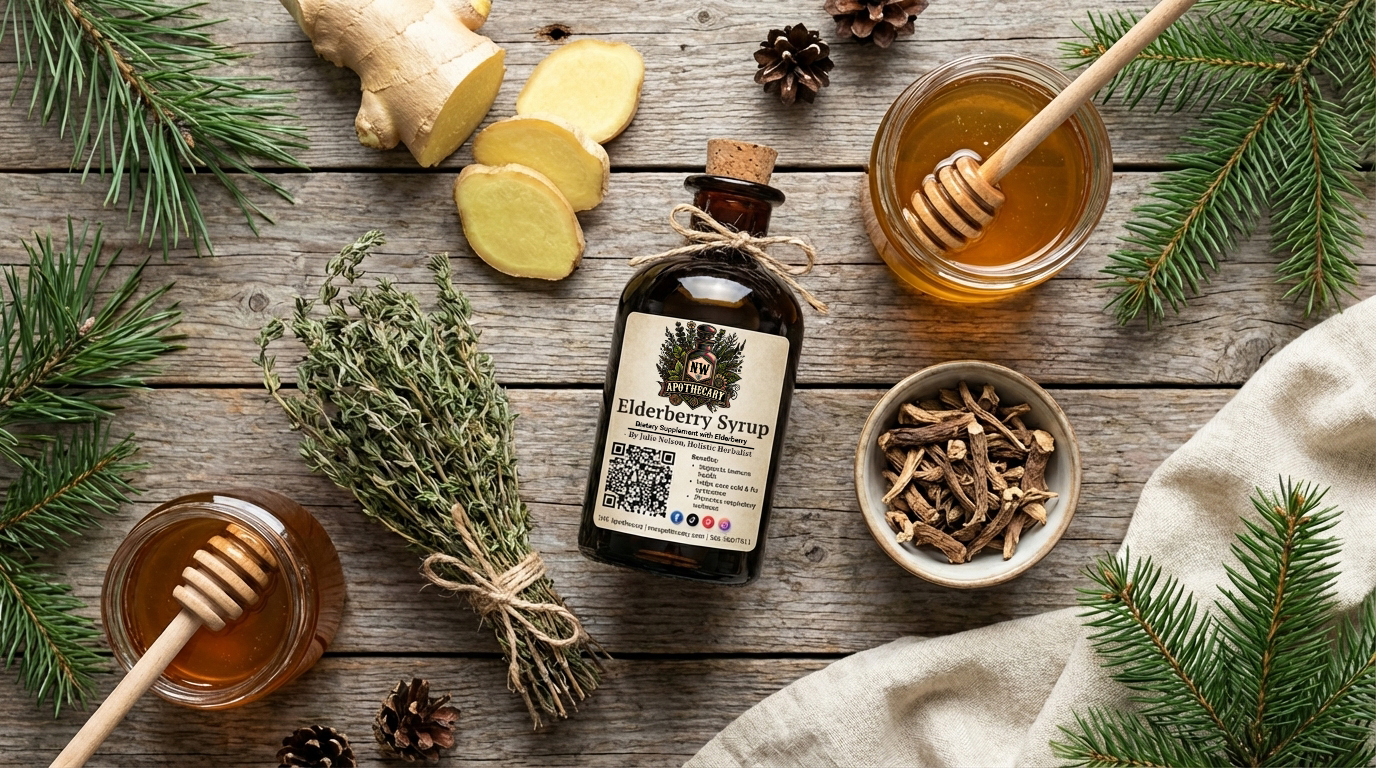
If you’ve been around me long enough, you know I love elderberry. It’s reliable, kid-friendly, and great for everyday immune support. I take it when I’m traveling, stressed, or when “everyone” seems to be getting sick.
How I use it:
- Daily: A small daily dose (tincture or syrup).
- Acute: I bump it up to every 3–4 hours if I feel something coming on.
It also plays really well with echinacea, ginger, and Vitamin C–rich foods.
Echinacea — The “First 48 Hours” Herb
Echinacea is not your “daily immune” herb—it’s your early intervention herb. When you use it right at the onset of symptoms, you feel the difference.

How I use it:
- Timing: Small, frequent doses every couple of hours for the first day or two.
- Maintenance: After the first 48 hours, I shift to 2–3 times a day.
If your throat starts getting that scratchy “uh-oh” feeling? This is the herb.
Fire Cider — Warm, Spicy, and Clears the Gunk
If you’re not making Fire Cider yet, winter is a perfect time to start. It’s warming, spicy, a little wild, and amazing for congestion, sluggish digestion, and that cold-weather “blah.”
Quick Fire Cider Recipe Just toss the following into a clean jar:

- Onion
- Ginger
- Horseradish
- Garlic
- Lemon
- Rosemary or thyme
- A hot pepper
- Apple cider vinegar (enough to cover everything completely)
Let it sit for 4–6 weeks, strain, and add honey to taste. Take a spoonful daily, or more if you’re sick. This stuff wakes up your whole system.
Ginger — Warming + Circulatory Support

Ginger is the herb I use when I’m cold, tired, or congested. It warms you up, gets things moving, and helps break up mucus.
How I use it:
- Fresh ginger tea (I slice the root thick).
- Add it generously to broths.
- A few drops of tincture before meals.
It’s simple, accessible, and it works.
Thyme — My Favorite Winter Lung Herb
Thyme doesn’t get enough love. If someone in the house has a wet cough or stubborn congestion, thyme is one of the first things I reach for.
Ways I use it:
- Strong tea: It’s surprisingly tasty with a little honey.
- Culinary: Add a handful to soup.
- Steam: Use it in a steam inhalation for stuffy noses.
It helps move mucus out and calms the spasms that make coughing miserable.
Marshmallow Root — For Dry, Scratchy Coughs
If the cough is dry, hot, and irritating, that is a totally different story. Marshmallow root is what you want. It’s soothing, cooling, and coats the throat.
How I use it: I usually make a cold infusion:
- Put 1 tablespoon of the root in a jar of cold water.
- Leave it overnight in the fridge.
- Strain and sip throughout the next day.
Kids usually love this one because it feels gentle and comforting on a sore throat.
My Simple Winter Game Plan
Daily Maintenance
- A dose of elderberry
- Ginger tea or ginger in food
- Lots of water (yes—water still matters in winter!)
At the First Sign of Illness
- Echinacea every couple of hours
- Elderberry every 3–4 hours
- A spoonful of Fire Cider
- Rest, warmth, and bone broths
For Coughs
- Wet cough → Thyme
- Dry cough → Marshmallow root
- Congested head → Ginger + steam
Wrap-Up
Building a Winter Wellness Cabinet doesn’t have to be complicated. A few herbs, used at the right time, make a huge difference. Keep them stocked, know when to grab each one, and you’ll move through winter feeling a lot more prepared.
If you want help putting together your own cabinet—or need a custom blend—I’m always here to help.
Disclaimer: I am a herbalist, not a licensed medical professional. The information shared on this blog is for educational purposes only and is not intended to diagnose, treat, or replace professional medical advice. If you are experiencing a medical emergency, please call 911 or contact your healthcare provider immediately. Always speak with your physician or qualified healthcare professional before starting any herbal protocol—especially if you’re pregnant, nursing, have a medical condition, or take prescription medications. Every individual responds differently to herbs, and they may interact with medications or existing conditions. No client–practitioner relationship is established by reading this content. Use of the information provided here is at your own discretion and risk.