
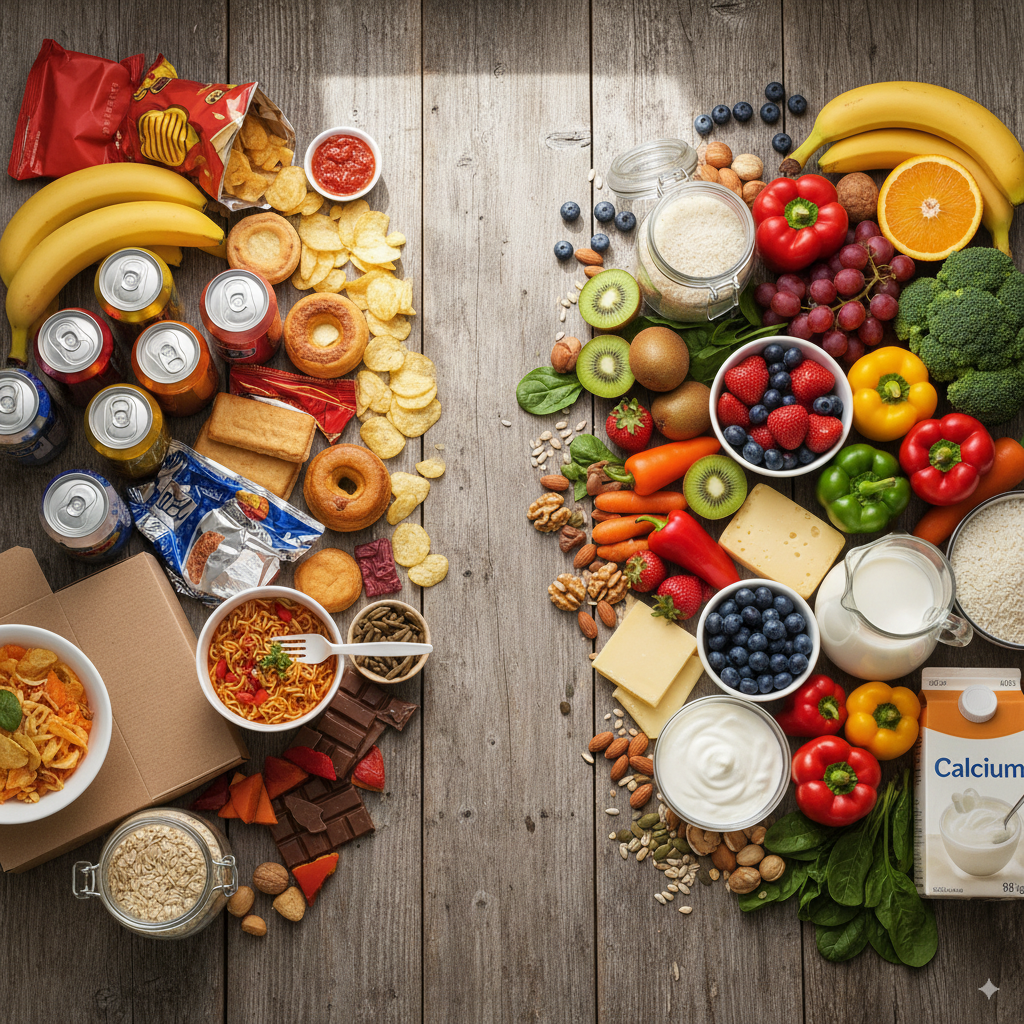
Ultra processed foods are everywhere — from sodas and chips to frozen dinners and packaged snacks. A new advisory published in JAMA from the American Heart Association highlights just how much these foods dominate the U.S. diet. On average, more than half of daily calories now come from ultra processed foods, and for kids it’s even higher. This trend is being called a “growing public health challenge.
What Counts as Ultra-processed?
The term comes from the NOVA classification system, which groups foods by level of processing.
- Unprocessed or minimally processed: fresh fruits, vegetables, grains, meat.
- Processed: canned beans, cheese, freshly baked bread.
- Ultra-processed: foods made with additives, preservatives, flavor enhancers, stabilizers — ingredients you won’t find in a home kitchen. Think soda, packaged pastries, hot dogs, instant noodles.
Not all ultra processed foods are equally harmful, but most are designed for convenience, long shelf life, and strong flavors — not health.
Why Ultra-processed Foods Harm Health
Research links high intake of ultra-processed foods with:
- Higher risk of heart disease
- Type 2 diabetes
- Obesity and premature death
It’s not just the sugar, fat, and salt. Other factors include:
- Structure loss: fiber is stripped away, leading to rapid digestion and blood sugar spikes.
- Additives and emulsifiers: can disrupt the gut microbiome and fuel inflammation.
- Packaging chemicals: substances like bisphenols and phthalates can leach into food.
How Much Are We Really Eating?
- Adults in the U.S. get about 55% of calories from ultra-processed foods.
- For children and teens, the share jumps to 62%.
These foods are no longer the exception — they are the majority of what many people eat every day.
Policy Changes on the Horizon
The American Heart Association is pushing for stronger action:
- Clearer food labeling, possibly calling out “ultra-processed” on packages.
- Limiting marketing of ultra-processed foods, especially to children.
- Revisiting “Generally Recognized As Safe” rules that allow many additives without independent testing.
- Supporting policies that make fresh, whole foods more affordable and available.
What You Can Do Right Now
While we wait for big policy shifts, here are steps you can take:
- Check labels – The longer the ingredient list, the more likely it’s ultra-processed.
- Cook simple meals at home – Soups, stir-fries, and roasted vegetables are quick and nourishing.
- Swap snacks – Choose nuts, fruit, or plain yogurt instead of chips and candy.
- Prioritize balance – Aim to replace just one ultra-processed item per day with a whole food alternative.
The Bigger Picture
Ultra-processed foods aren’t just about convenience — they shape our long-term health. The new advisory underscores that reducing these foods is essential for heart and metabolic wellness. Small, steady changes matter, especially when combined with lifestyle choices like exercise, stress management, and natural support from herbs and whole foods.
References:
At NW Apothecary, I work with clients to make sustainable changes — combining herbal support, nutrition, and lifestyle strategies. If you’re ready to cut back on ultra-processed foods and explore healthier options, reach out and let’s create a plan that works for you.
Disclaimer: I am a herbalist, not a licensed medical professional. The information shared on this blog is for educational purposes only and is not intended to diagnose, treat, or replace professional medical advice. If you are experiencing a medical emergency, please call 911 or contact your healthcare provider immediately. Always speak with your physician or qualified healthcare professional before starting any herbal protocol—especially if you’re pregnant, nursing, have a medical condition, or take prescription medications. Every individual responds differently to herbs, and they may interact with medications or existing conditions. No client–practitioner relationship is established by reading this content. Use of the information provided here is at your own discretion and risk.