
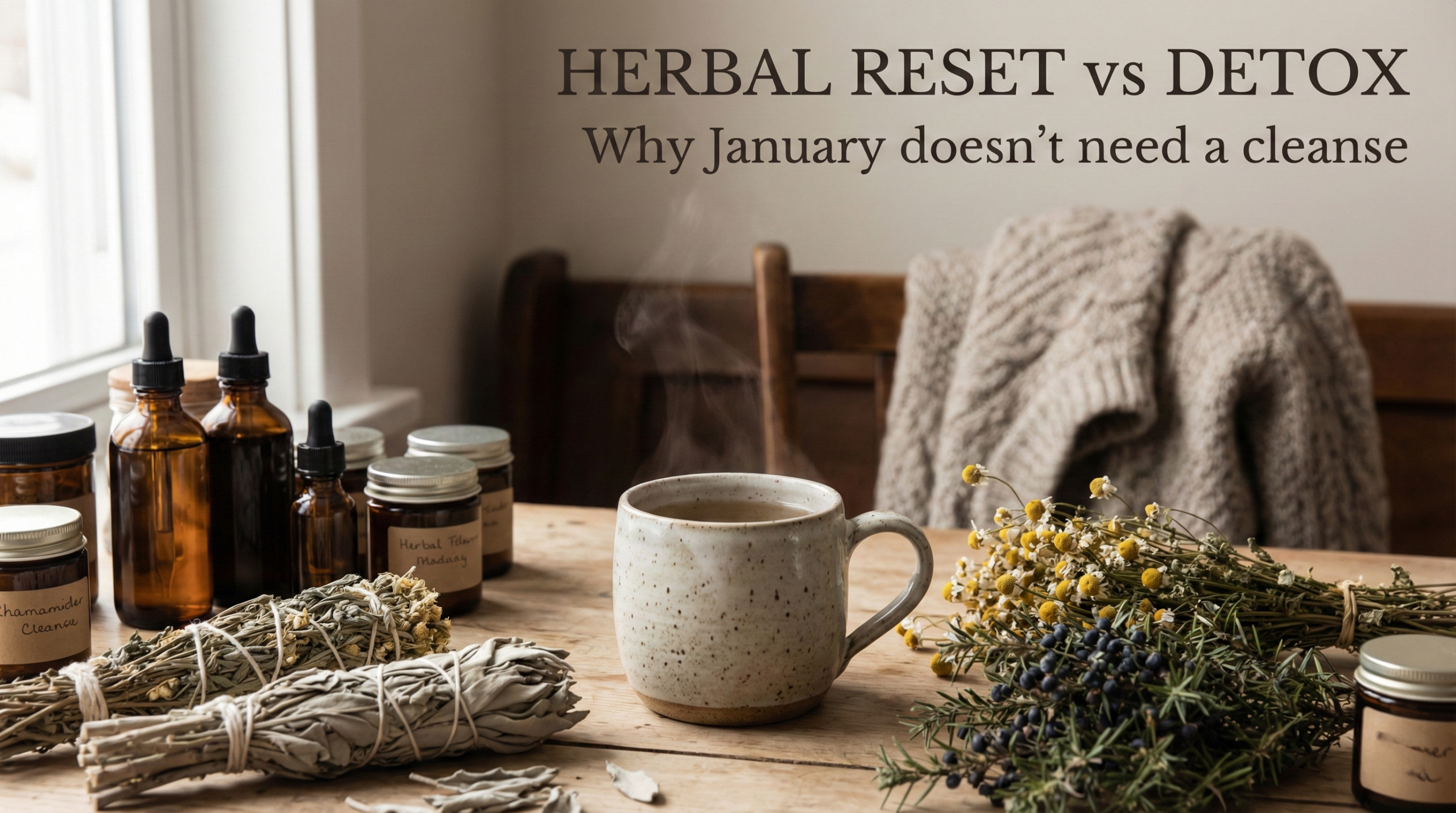
Every January, the same message shows up everywhere:
Cleanse. Detox. Start over.
But here’s the truth—
January is not the season for detoxing.
It’s the season for repair, nourishment, and gentle support.
After the holidays, most bodies are already depleted. Less sunlight. Colder weather. Disrupted sleep. Extra stress. Asking your system to “flush everything out” right now often does more harm than good.
At NW Apothecary, we approach January differently.
We focus on a herbal reset, not a detox.
Detox vs. Reset: What’s the Difference?
Detox
- Aggressive
- Often restrictive
- Pushes elimination hard
- Can increase fatigue, anxiety, and dryness
- Common side effects: headaches, irritability, poor sleep, low energy
Herbal Reset
- Gentle and supportive
- Nourishes organs instead of forcing them
- Supports digestion, liver function, and nervous system
- Works with winter, not against it
- Sustainable and grounding
A reset helps your body do what it already knows how to do—just more efficiently and calmly.
Why Winter Is the Wrong Time for a Cleanse
In traditional herbalism, winter is a yin season:
- Cold
- Inward
- Restorative
Your digestion is slower. Your nervous system is more sensitive. Your tissues are drier. A hard cleanse pulls resources when your body is trying to conserve them.
This is why many people feel worse after January detoxes—more anxious, more exhausted, more inflamed.
The body doesn’t need punishment. It needs support.
What a January Herbal Reset Actually Looks Like
Instead of “detoxing,” we support the systems that naturally handle waste and balance.
1. Gentle Liver & Digestive Support
Not flushing—toning.
Helpful herbs in January:
- Dandelion root (i) – supports liver and bile flow without overstimulation
- Burdock root (i)– slow, steady support for elimination and skin
- Yellow dock (i) – helpful in small amounts when paired with moistening herbs
- Ginger (i)– warms digestion and improves absorption
- Digestive bitters (i)– micro-doses before meals, not large amounts
The goal is better digestion, not faster elimination.
2. Nervous System First
This is the piece most detox plans ignore.
If your nervous system is fried, detoxing adds stress. Stress slows detox pathways.
January-friendly nervines include:
- Skullcap (i) – calms mental overactivity and tension
- Milky oats (i)– deeply nourishing after stress or burnout
- Lemon balm (i) – supports digestion and anxiety
- Chamomile (i) – gentle, soothing, and anti-inflammatory
A calm nervous system improves sleep, digestion, and hormone balance—all essential for natural detoxification.
3. Warmth, Moisture, and Rhythm
Simple things matter more than supplements in January.
Focus on:
- Warm meals and drinks
- Adequate hydration (not ice-cold water)
- Consistent meal times
- Earlier nights
- Fewer stimulants
Herbs work best when the basics are in place.
Signs a Reset Is Working (Without a Detox)
- Improved digestion without urgency
- More stable energy
- Better sleep
- Less anxiety or irritability
- Fewer cravings
- Feeling grounded instead of depleted
This is slow medicine. And it works.
January Is Not About Starting Over
It’s about recovering from what came before.
Spring is for cleansing.
January is for restoration.
If you’re feeling tired, dry, anxious, or run down, that’s not a sign you need a stronger detox—it’s a sign your body is asking for gentleness.
Herbs can help you reset without pushing your system past its limits.
Disclaimer: I am a herbalist, not a licensed medical professional. The information shared on this blog is for educational purposes only and is not intended to diagnose, treat, or replace professional medical advice. If you are experiencing a medical emergency, please call 911 or contact your healthcare provider immediately. Always speak with your physician or qualified healthcare professional before starting any herbal protocol—especially if you’re pregnant, nursing, have a medical condition, or take prescription medications. Every individual responds differently to herbs, and they may interact with medications or existing conditions. No client–practitioner relationship is established by reading this content. Use of the information provided here is at your own discretion and risk.